

A traditional companion of nomads (from Libya to Morocco, including Tunisia and Algeria), and of the herders of the Atlas Mountains and the High Plateaus, the Barb horse remains a remarkable saddle and endurance horse.
It is a breed native to the Maghreb, whose presence in North Africa dates back 3,500 years. Thanks to its physical and behavioral qualities, it has been used throughout history to improve other horse breeds.
Indeed, the Barb was long used as a warhorse by Julius Caesar during the conquest of the Iberian Peninsula and by the German army in its march to Moscow. It was also the favorite dressage horse of the kings of France.
While in the Maghreb the Barb horse remains associated with traditional equestrian activities (Tbourida), its qualities make it ideal for many modern sports such as dressage, endurance riding, polo, working equitation, TREC (Techniques de Randonnée Équestre de Compétition), trail riding, and more.
The Barb horse is considered a versatile horse with energetic gaits, comfortable on hard and uneven terrain.
It is of medium size, ranging from 1.45m to 1.60m, with a fairly strong head with a slightly convex to straight profile, often with prominent cheekbones, indistinct nostrils, a slightly arched neck, a slightly sloping croup, a low-set tail, fine and sturdy legs, and small hooves with high heels. The Barb horse is a square-built horse, often gray in color.
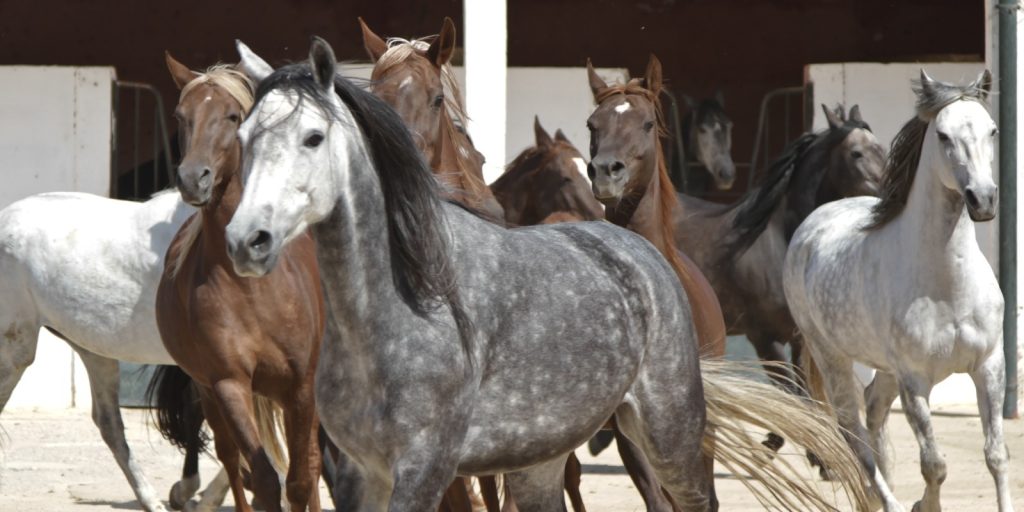
The Arabian Barb horse is the result of crossbreeding between the Purebred Arabian and the Barb, two iconic breeds from the Maghreb and the Arab world. The Arabian Barb harmoniously combines the qualities of its ancestors, making it a versatile mount that is both elegant and robust.
More harmonious than the Barb, the Arabian-Barb is an excellent saddle horse and Tbourida horse, a traditional equestrian art.
It is distinguished by its versatility, docility, and resistance to varied climatic conditions and difficult terrain.
It is of medium size, varying between 1.45 m and 1.60 m at the withers, with a fine head, often with a concave profile, expressive eyes, a supple neck, lean musculature, a well-developed chest, and solid, lean limbs. These characteristics make it a graceful and enduring horse, suited to both sporting disciplines (leisure riding, endurance, shows, etc.) and equestrian traditions (Tbourida, etc.).
In Morocco, this breed, together with the Barb, constitutes the bulk of the Moroccan horse population, with an identified population of 60,000 Arab-Barb horses.

For most people, the Arabian horse is the quintessential horse. Indeed, without it, the breeding of thoroughbreds would have been impossible.
Essential for the improvement of the horse breed, the Arabian is undoubtedly the most beautiful and refined of all equines.
While the origin of the Arabian horse remains uncertain, paintings and engravings show that the Assyrians, Persians, and especially the Egyptians of the Pharaonic era already rode horses with long, elegant, and refined legs. This suggests that this type of light and fast equine is not the result of selective breeding and human intervention, but rather the product of adaptation to the extreme living conditions of its original desert environment.
Arabian horses were selected for their physical and temperamental qualities, beginning with the most essential of all in combat: obedience. This concern is the origin of the legend known as the Five Mares of the Prophet, “Al-Khamsa al-Rasul.” Their names were Obajah, Saqlaouiah, Koheilah, Hamdaniyah, and Habdah. Some of these names are still used today to designate bloodlines within the Arabian breed.
Introduced to Morocco with Islam, this horse is elegant and harmonious overall, fitting within a square. It is a medium-sized horse (1.40 to 1.55 meters), with a small, refined head adorned with pointed, mobile ears, a flat forehead, prominent eyes, a straight, slightly snub profile, wide-open nostrils, and a well-set neck that is neither too fine nor too fleshy. It has a horizontal topline ending in a high-set tail, a broad chest, and a relatively undeveloped abdomen. Its limbs are sound and muscular, with strong tendons and broad joints.
In Morocco, there are an estimated 13,000 Arabian horses.
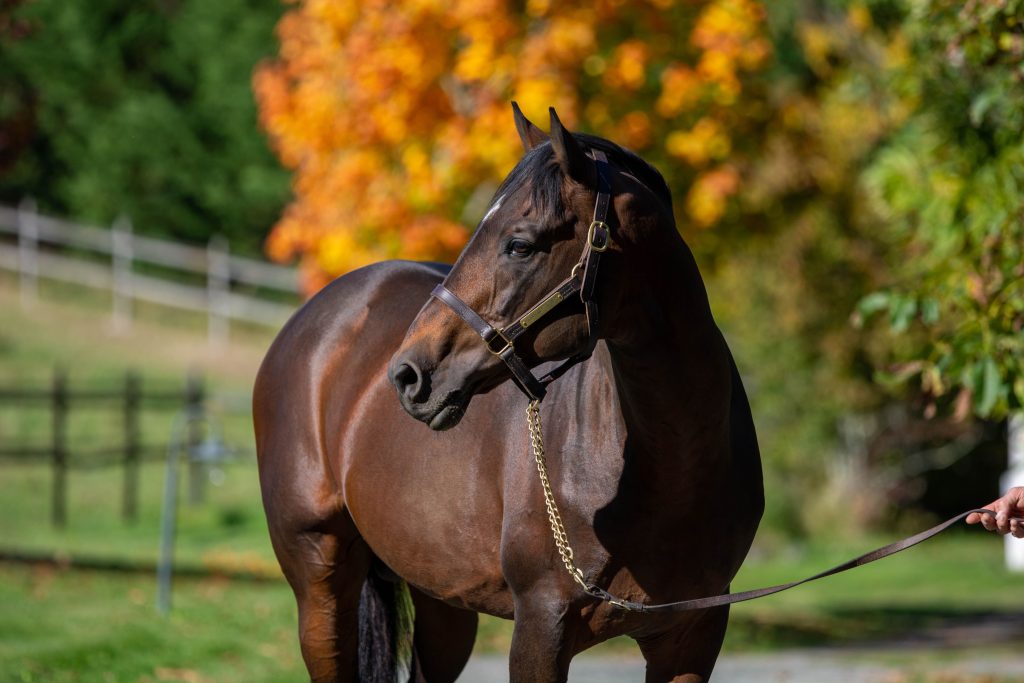
Only the Thoroughbred can truly rival the Arabian. The former, unlike the latter, owes its extraordinary qualities and characteristics not to adaptation to its environment and original habitat, but, more simply, to the sporting tastes and breeding skills of the British.
From the 15th century onward, an increasing number of horses of Eastern origin were imported to England and crossed with native ponies; the broodmares resulting from these crosses formed the foundation from which the entire Thoroughbred breed originates.
Three stallions—Godolphin, a Barb of Moroccan origin from the Meknes Stud Farm, bred by Moulay Ismail and later by his contemporary Louis XIV; Darley Arabian, an Arabian thoroughbred; and Beyerly Turk—were the ancestors of the million Thoroughbreds alive today.
The Thoroughbred, the quintessential racehorse, is unbeatable over middle distances.
Although, like the Arabian Thoroughbred, the English Thoroughbred was not bred for beauty or elegance, they are splendid, well-bred animals with graceful, harmonious limbs, energetic and swift.
The head is fine, generally small, and well-proportioned. The eye is bright, attentive, and expressive.
The muzzle is straight or slightly snub, but less concave than in some Arabians.
The neck is long, slender, and muscular at its base.
The chest, broad and deep, provides ample thoracic capacity for the respiratory and circulatory systems.
The well-supported back extends into a short croup, inherited from the Arabian ancestor, ending in a high-set tail.
The legs, with proportionally short cannons, are lean and very strong.
The coat is fine and silky, bay or chestnut, but never pinto.
In Morocco, there are 3500 Thoroughbred horses.
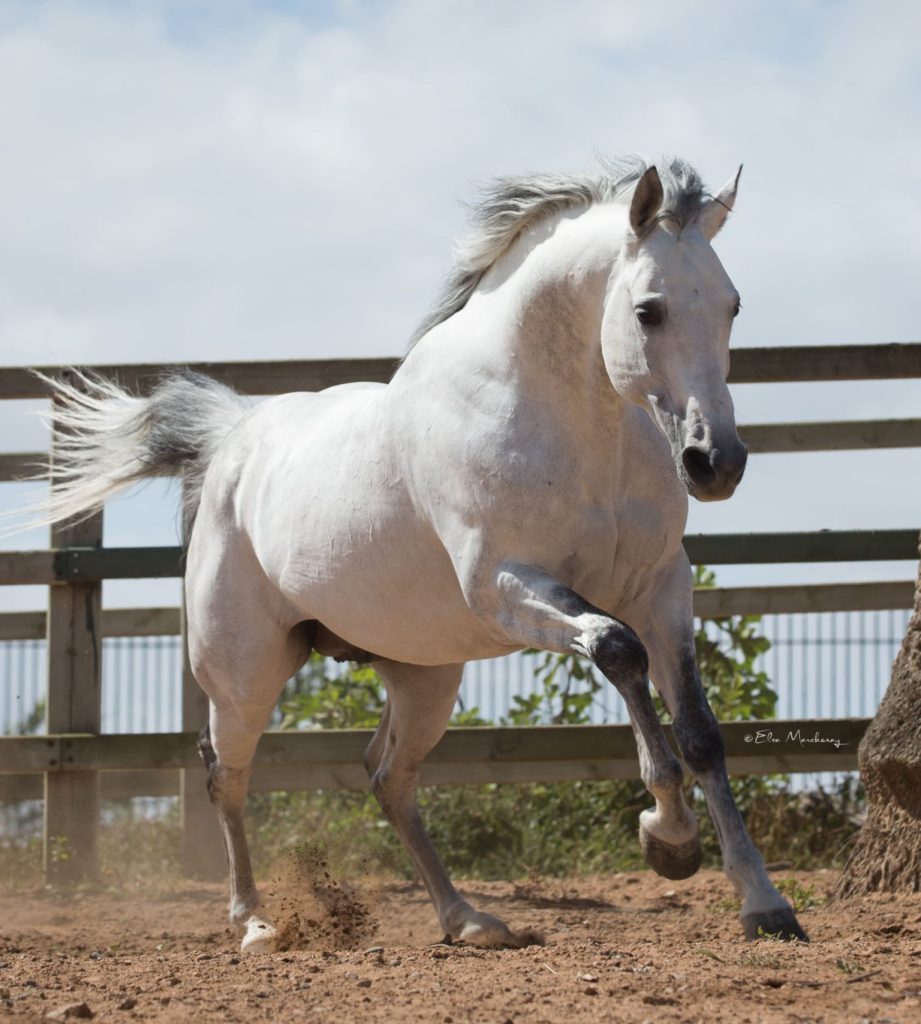
The ultimate riding horse, bred from two pure breeds: the Arabian Thoroughbred and the English Thoroughbred. To qualify as a pure Anglo-Arabian, a horse must have at least 25% Arabian blood.
The Anglo-Arabian was developed in French breeding programs.
The Anglo-Arabian is a versatile horse with aptitudes for both racing and equestrian sports. As a result, it is set to replace horses other than English Thoroughbreds at national racetracks.
It is a slender horse with a fine head, often with a straight profile, and a long, thin neck.
The croup is long or slightly sloping, and the limbs are fine.
In Morocco, there are 5,000 Anglo-Arabian horses.